Periodontal Care

Periodontal Care

Gum disease is an inflammation of the gum line that can progress to affect the bone that surrounds and supports your teeth. The three stages of gum disease — from least to most severe — are gingivitis, periodontitis and advanced periodontitis.

Signs & Symptoms

Gum disease or periodontal disease can be painless, so it is important to be aware of any of the following symptoms:

  • Swollen, red, tender or bleeding gums
  • Gums that recede or move away from the tooth
  • Persistent bad breath or bad taste in mouth
  • Loose teeth
  • Visible pus surrounding the teeth and gums
  • Tenderness and discomfort

Periodontal Care

There are 3 steps to in order to diagnose whether you have periodontal disease.

  • Taking radiographs – assist in making the calculus or tartar build up under the gum more visible. It also show the current condition of the bone; for example, bone loss.
  • Clinical examination to visually check the amount of plaque and tartar build up as well as the color and shape of the gums as indicators for gum disease.
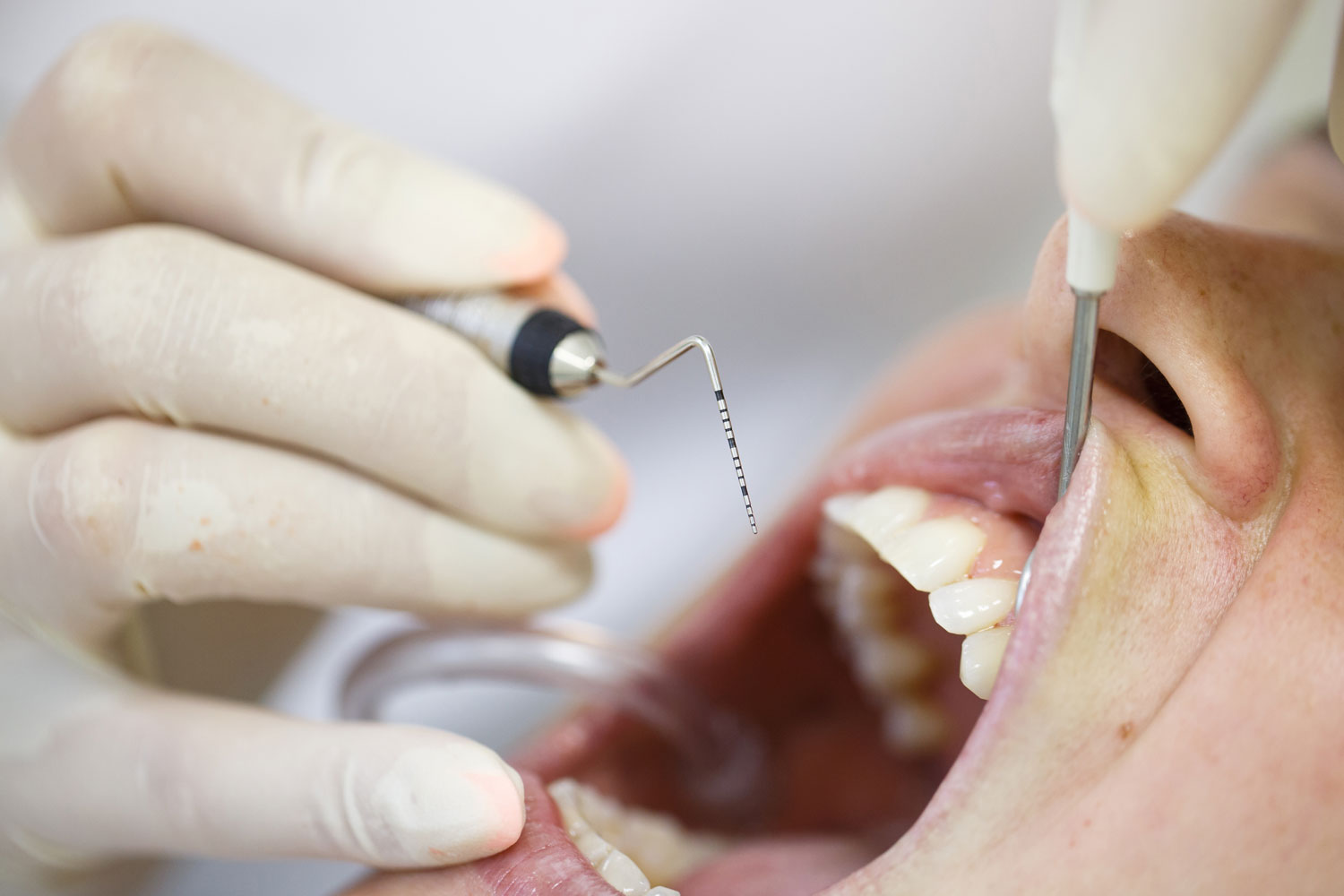
  • Measuring the pockets depth which is the space located between your gums and teeth. Destructive bacteria contained in plaque and tartar cause the formation of deep pockets and bone loss. Any pockets that measure more than 3mm is probably an indication of periodontal disease.

DEEP CLEANING

Deep cleaning, or scaling and root planing is normally performed by your dentist or dental hygienist in a couple of visits. The exact number of visits however depends on your dentist and the amount of tarter build up. Often your dentist will choose to administer local anesthetic to make the procedure virtually painless. The goal of the procedure is to eliminate the infection by removing the bacteria containing plaque and tarter that has attached to your teeth and their roots under the gum.

The deep cleaning is either done manually or with an ultra-sonic instrument called a cavitron, or sometimes a combination of the two. Both techniques loosen and remove plaque and tarter build up.

In addition, antibacterial irrigants or local antibiotics such as Arestin may be used in conjunction with the cleaning procedure to further reduce the number of bacteria around the gums.

Periodontal disease cannot currently be cured; it can only be controlled, so it is important to follow your dentist’s recommendations for follow-up maintenance and treatment. In addition to routine check ups, proper dental hygiene at home is of course also important to help prevent the reoccurrence of this destructive disease.